
- This Discussion Thread has 25 replies, 14 voices, and was last updated 4 days ago by Mahbub Ara.
-
AuthorPosts
-
-
2024-04-12 at 4:22 pm #12378John-paulKeymaster
Thinking of your current or a past practice area provide an example of the train of transmission specific to that area. Fill in all ‘links’ in the chain with an example for each link:
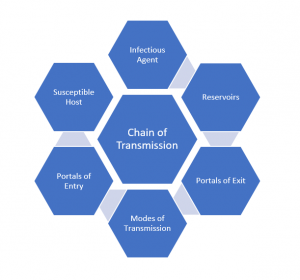
Infectious Agent:
Reservoirs:
Portals of Exit:
Modes of Transmission:
Portals of Entry:
Susceptible Host:
-
2026-09-16 at 2:19 pm #53572AndreaParticipant
Infectious Agent: E. Coli
Reservoirs: the residents bladder
Portals of Exit: urine
Modes of Transmission: unwashed healthcare worker hands, catheter tubing
Portals of Entry: the urethra
Susceptible Host: someone with a reduced immune system, prolonged catheterization
-
2026-09-17 at 1:20 pm #53581LeahParticipant
I enjoyed reading your reflection for this weeks discussion board Andrea.
Your example clearly shows how the different links in the chain of infection connect and is easy to follow.
I have worked with patients infected with E.coli in the past, and it is a good reminder that something as simple as washing your hands properly can help break the chain of infection, and protect both the patient and staff
-
-
2026-09-16 at 4:38 pm #53575AastaParticipant
Infectious Agent: MRSA (Methicillin-Resistant Staphylococcus aureus)
Reservoirs: Humans – Skin, groin, throat, armpits, or nasal passages.
Portals of Exit: Broken skin, drainage, pus, or fluid from an infected wound or sore.
Modes of Transmission: Contact transmission – Either direct or indirect. ie: hands, equipment, or surfaces.
Portals of Entry: Broken skin, wounds, surgical incisions, invasive devices.
Susceptible Host: Hospitalized patients or people who have weakened immune systems, wounds, or invasive devices.
-
2026-09-17 at 6:53 pm #53586EmmaParticipant
Hello Aasta! I wanted to respond to your discussion post because MRSA is a bacterium that I personally see quite often where I work. I currently work in LTC, and the MRSA cases I have encountered have been more related to colonization in the GI tract. I enjoyed reading your example of how MRSA can spread, especially since your example focused on MRSA being present in a wound. It is interesting to see how the different portals of exit and modes of transmission can contribute to the spread of MRSA.
-
-
2026-09-17 at 1:03 pm #53580LeahParticipant
Infectious Agent: Clostridioides Difficile (C.diff) — which is in the Bacteria category of microorganisms.
Reservoirs: The patients intestinal tract
Portal of Exit: Patient was presenting with frequent bouts of watery diarrhea, so the portal of exit was the patients feces which contained the c . Diff spores
Modes of transmission: contact transmission (fecal/oral route).
patient had their own room, commode, laundry bin, and designated equipment during these times to prevent spreading the bacteria to healthcare equipment. Since it can be spread to the mouth with contaminated hands after touching a contaminated surface , proper hand hygiene and disinfecting techniuqes are crucial.Portal Of Entry: The mouth- when the patient ingested C diff spores
Suspecticle Host: In hospital setting, previous ABX treatment, elderly, weakened immune system
-
2026-09-18 at 10:27 pm #53597SaraParticipant
Hi Leah Thank you for bringing up C.diff as your chain of infection.
I can relate to this one as well as I have expereinced this recently within the community setting. We had to develop a framework for our care team to follow to ensure it the appropriate PPE was being worn based off of the clients symptoms. We found that once the care team receieved the appropriate follow ups and step by step framework based on the symptoms present within a certain timeframe, our staff felt more protected, it is often hard as hosts symptoms can be dormant and have a relapse even after treatment.
-
2026-10-01 at 10:02 am #53667MarilynKeymaster
Hi Sara,
I agree with your perspective, having clear guidelines and a step-by-step framework helped the care team feel more confident and protected. Providing staff with guidance on appropriate PPE based on the client’s symptoms and ongoing assessment was especially helpful, as symptoms can sometimes be dormant and reappear even after treatment. Clear communication and follow-up are important in supporting both staff safety and quality client care.
-
-
2026-10-03 at 7:43 pm #53758Mahbub AraParticipant
Hi Leah
I really enjoyed reading your post. You made it clear about this microorganism chain of transmission. Hand hygiene is always crucial to breaking the chain of transmission. In my workplace, one resident was with Clostridioides Difficile carrier. The resident was on contact precautions. She was in a private room with washroom, and with separate laundry bins. Our IPAC manager provided education to front-line health care provider regarding reservoir, portal of exit, mode of providers, and portal of entry. Housekeeping would wash her cloths separately from other clients and special sporicidal disinfectant was used to clean washroom.
-
-
2026-09-17 at 6:44 pm #53585EmmaParticipant
Infectious Agent: VRE (Vancomycin-Resistant Enterococci)
Reservoirs: Gastrointestinal tract of infected Resident
Portals of Exit: Bowel movement from Infected Resident
Modes of Transmission: Contact transmission through contaminated hands after touching bathroom grab bars, or other medical equipment.
Portals of Entry: hand to mouth contact after touching contaminated surface.
Susceptible Host: Elderly LTC residents, especially those with conditions that weaken immune system
I chose to create my chain of infection with the example of VRE because it is a common bacterium, often seen in LTC, which is where I currently work.
-
2026-09-17 at 8:37 pm #53587AastaParticipant
Hi Emma,
Thank you for sharing your experience with VRE in the LTC. It is similar to what we see in the hospital.
As you mentioned, many of these patients/residents have weakened immune systems, which is a major concern when they may be exposed to various bacteria. Wearing proper PPE not only protects patients and healthcare workers but also helps prevent the spread of VRE within any healthcare setting. -
2026-09-20 at 10:37 pm #53612SophiaParticipant
Hi I really liked your example of VRE, especially since it is something we see quite often in LTC. You did a good job explaining how easily it can be spread through contaminated hands and commonly touched surfaces. It also shows how important hand hygiene and proper cleaning are in preventing the spread. I agree that LTC residents can be more vulnerable because of their age and other health conditions. This is very similar to Retirement homes.
-
2026-10-01 at 8:17 pm #53722DanielaParticipant
You example if very clear and relevant to many LTC residents. Thank you for sharing.
These would be great to post for staff as education/reminders.
-
-
2026-09-18 at 10:20 pm #53596SaraParticipant
Infectious Agent: Norovirus causing gastroenteritis
Reservoir: My client experiencing gastrointestinal symptoms
Portal of Exit: Vomit, diarrhea, and gastric contents during G-tube venting (in the example at work)
Mode of Transmission: Contact transmission through touching a contaminated surface.
Portal of Entry: My hands to mouth after touching infected surfaces.
Susceptible Host: Other complex care pediatric clients I cared for during that week and as well as suspecting my own family to the infectious agent once home.I chose to reflect on the Norovirus as we often see it spread rapidly throughout our school age clients in the community setting- I also get to experience it at home as my child is in daycare!
-
2026-09-20 at 2:26 pm #53606TammyParticipant
Hi Sara, thank you for reflecting on the Norovirus which can cause food borne illness and expresses the need for proper food washing and handling. I can see this spreading quickly in crowded environments and has taught me to personally pay attention with constant hand washing, cleaning and sanitation practices.
-
-
2026-09-20 at 1:56 pm #53605TammyParticipant
Infectious Agent: Bacteria & Viruses
Reservoir: people with poor hygiene practices and illness
Portals of Exit: Excretions (Respiratory), skin (hands), secretions (saliva/sebum/sweat/mucus)
Modes of Transmission: Direct contact, droplet (sneezing), airborne (coughing)
Portals of Entry: Mucous membrane, respiratory, broken skin
Susceptible Host: Poor nutrition, not following IPAC practices, illness/stress, & inadequate education -
2026-09-20 at 7:27 pm #53607ChristianneParticipant
Infectious Agent: Coronaviruses.
Reservoir: Pubilic washrooms and people with poor hygiene.
Portal of Exit: Skin, Bodily fluids.
Modes of Transmission: Door handles, faucets, toilets, droplets.
Portals of Entry: GI tract, broken skin.
Suceptible Hosts: Neglecting Health and Safety advice, immunocompromised.-
2026-09-21 at 10:32 am #53614ReneeParticipant
Hi Christianne,
Corona virus shed a lot of light on how much transmission of a virus is spread and how important hand hygiene is. Stores made small implementations of handwashing stations which many still have an option of today ( sanitizer).-
2026-09-21 at 5:56 pm #53617AndreaParticipant
Hi Christianne
The corona virus really did shed light to how easily a virus can be spread. Crazy how much hand washing and hand sanitizer is in use today.
Andrea
-
-
-
2026-09-20 at 8:04 pm #53608ChristianneParticipant
Hello Tammy,
I find myself hearing viruses and bacteria are wildly miss understood by some till this day.
What I mean by that, is, I still find myself witnessing people convinsenced antibiotics can treat symptoms they have after being diagnosed with a virus.
When there are educational opportunies with this. Often the idea is it helps them feel better. “There words”. Coincidences.
Its not unfamiliar to me in needing to explain this to people on the regular. Also educational opportunities in informing bacterial infections are still contagous more often then people realize.
One thing I find myelf witnessing is, in public washrooms hand hygiene routines. Im hearing people still saying they did not touch anything so don’t feel the need to use soap.
I can’t help but feel my anxiety creep up a bit hearing this.
-
2026-09-20 at 10:28 pm #53611SophiaParticipant
1. Infectious agent: C. difficile bacteria.
2. Reservoir: A patient with C. diff infection plus contaminated surfaces such as bedrails, commodes, and call bells.
3. Portal of exit: Feces, from the patient’s diarrhea.
4. Mode of transmission: Indirect contact. A nurse touches a soiled commode or the patient, then a shared BP cuff or the next patient without proper hand hygiene.
5. Portal of entry: The mouth, through swallowing spores from contaminated hands or objects.
6. Susceptible host: An older patient on antibiotics, who is immunocompromised. -
2026-09-21 at 10:42 am #53615ReneeParticipant
Infectious Agent: Salmonella Enterica
Reservoirs: Intestinal tract of humans of animals and humans
Portals of Exit: feces of infected humans or animals
Modes of Transmission: fecal-oral route, usually by ingesting food or water contaminated with animal or human feces. Cockroaches, insects in clients homes ( Homecare)
Portals of Entry: Orally, open wounds contaminated by fecal matter, poor hand hygiene
Susceptible Host: anyone with a weakened immune system -
2026-10-01 at 7:54 pm #53719DanielaParticipant
Infectious Agent: Pink Eye (conjunctivitis)
Reservoirs: Eye/eye secretions of infected person
Portals of Exit: Eye discharge/tears
Modes of Transmission: Contaminated hands/poor hand hygiene/possible contaminated objects
Portals of Entry: Eye
Susceptible Host: Anyone can become infected, especially those in close contact.
-
2026-10-03 at 7:39 pm #53757Mahbub AraParticipant
Infectious Agent: Methicillin resistant Staphylococcus aureus (MRSA)
Reservoirs: Human skin, infected wound, nasal passage, groin, contaminated surfaces.
Portals of Exit: pus or fluid drainage from infected wound, Infected or carrier person’s nasal secretion.
Modes of Transmission: Direct contact transmission from skin-to-skin contact, infected wound secretion or pus. Indirect transmission from contaminated surfaces.
Portals of Entry: Cut injury, abrasion on skin, surgical incision, medical devices like catheter.
Susceptible Host: Immunocompromised resident, ICU patient, hospital admission.
-
-
AuthorPosts
- You must be logged in to reply to this Discussion Thread.